

What In the World Is Department of Doing Good?
The name is not accidental. It is the argument.
Most Institutions Were Built to Do Good. We Help Them Stay Built.
Hospitals to heal. Schools to form. Governments to serve. Nonprofits to repair. Companies to create.
The problem has never been intention.
The problem is that complexity — unmanaged, unaddressed, allowed to compound — turns good intentions into fragmented operations. Misaligned leadership. Institutional drift. Organizations that began with a clear sense of purpose slowly lose the internal coherence that made that purpose executable.
They don't fail because they stopped caring.
They fail because caring is not a system.
Department of Doing Good exists at that intersection — between the mission that drew people to the work and the operational infrastructure required to make that mission durable.
The name holds both sides of that problem on purpose.
Doing Good — the mission, the human formation, the values that made the institution worth building.
Department — the structure, the operating discipline, the coherence required to make good intentions executable over time.
We take both halves equally seriously.
Because institutions that lose their humanity become incoherent. And institutions that can't operate don't do good.
You need both.
Where This Work Comes From.
Department of Doing Good did not emerge from an ivory-tower office suite.
It emerged from years of direct work inside human systems under pressure — across contexts that most operational firms never enter and most mission organizations never systematize.
Prison chaplaincy. Leadership development in high-complexity environments. Education reform and institutional transformation. Organizational systems work across nonprofits, faith communities, and mission-driven organizations. Field experience across Africa, the Middle East, and the United States.
This work spans the full arc — from the individual human being trying to lead with integrity under pressure, to the institutional systems that either support or undermine that leadership.
That arc is unusual.
Most operational consultancies understand systems but not human formation. Most leadership development practices understand people but not institutional complexity.
Department of Doing Good sits at the intersection — and that intersection is where the most important work actually happens.
The Thinking Behind the Work.
The frameworks Department of Doing Good uses — Signal Scan (the diagnostic), Coherence OS (the 3-3-3 model) — were not designed for a market.
They were developed through years of trying to understand a specific question:
Why do institutions that were built to do good lose the capacity to do it?
That question led through leadership theory, systems thinking, organizational behavior, theology, and field research across institutions in crisis and institutions thriving under pressure.
The answer, across all of that research and all of those contexts, kept resolving to the same place:
Fragmentation.
Not failure of intention. Not failure of intelligence. Not failure of resources.
The failure of internal coherence — the slow dissolution of the alignment between what an institution says it is, how it actually operates, and what it reinforces through its systems and structures.
The work of Department of Doing Good is the work of restoring that coherence.
Not through more complexity. Through signal clarity, operational alignment, and the human-centered infrastructure that makes coherence durable.
Core Convictions.
Coherence is a human problem before it is an operational one. No operating system restores what broken trust, misaligned leadership, or lost institutional identity has fragmented. The work begins with people.
Complexity is not the enemy. Unmanaged complexity is. Every institution worth building operates in a complex environment. The question is not how to reduce complexity but how to maintain coherence within it.
Technology amplifies what is already there. Institutions with coherent human systems are strengthened by AI. Institutions with fragmented human systems are accelerated toward crisis by it. The AI question is always, first, a coherence question.
Simple frameworks executed consistently outperform complex frameworks executed occasionally. The 3-3-3 model is not elegant because simplicity is a design preference. It is elegant because institutions under pressure need frameworks they can actually sustain.
The mission is not separate from the operations. How an institution operates is a statement about what it actually believes. The gap between stated mission and operational reality is not just an efficiency problem. It is an integrity problem.
An Operational Partner, Not Just a Consultant.
The word consultant implies something specific: an outside expert who assesses, recommends, and departs.
That is not what we do.
Department of Doing Good operates as an embedded operational partner — present through the diagnostic process, through the installation of Coherence OS, through the early months when new frameworks are most vulnerable to operational pressure.
We work with a small number of institutions at a time.
That is deliberate.
Coherence restoration is not a product delivered at scale. It is a process that requires sustained attention, deep institutional familiarity, and the kind of trust that takes time to build.
We take on engagements we believe we can serve well. We stay until the work is genuinely installed. And we build relationships designed to last beyond the initial engagement — because coherence, like any living system, requires ongoing attention.
Leadership Team
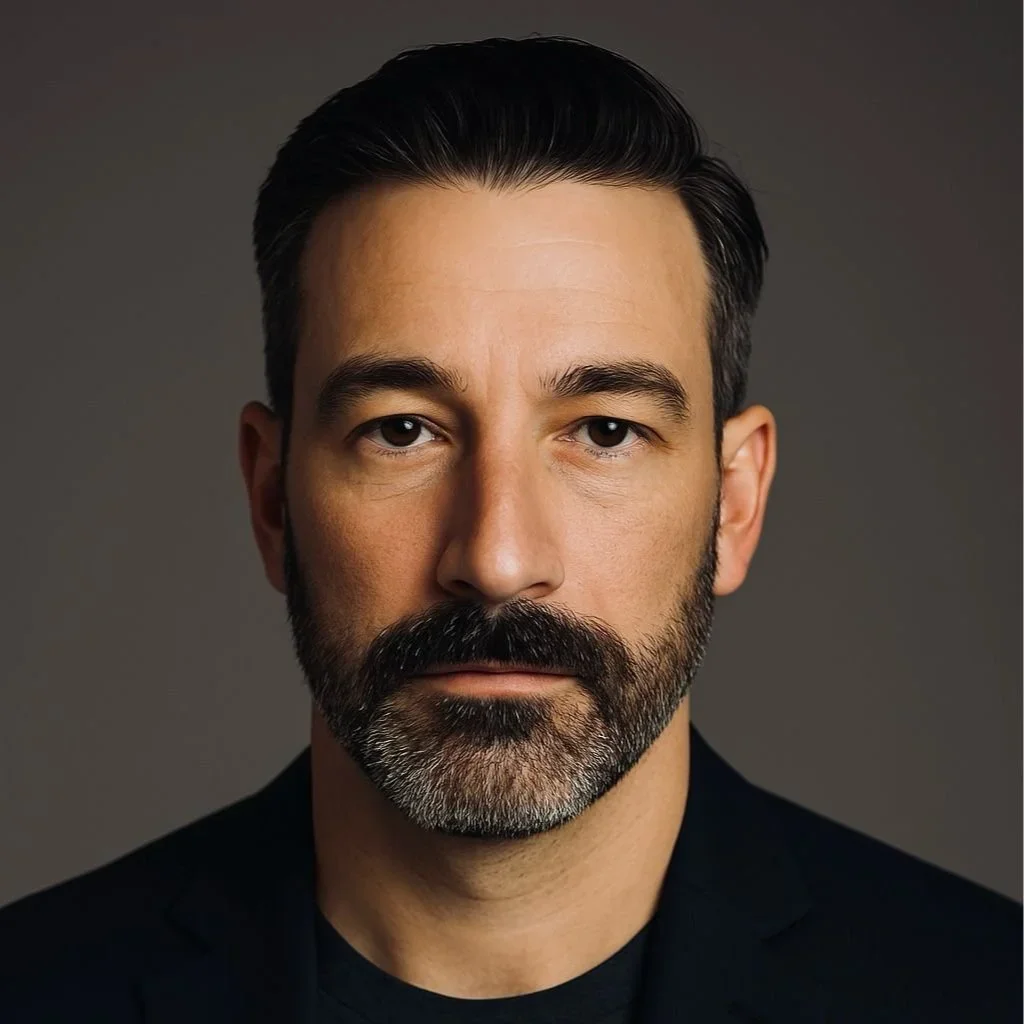
Dr. Zachary Hamilton, CEO (USA)
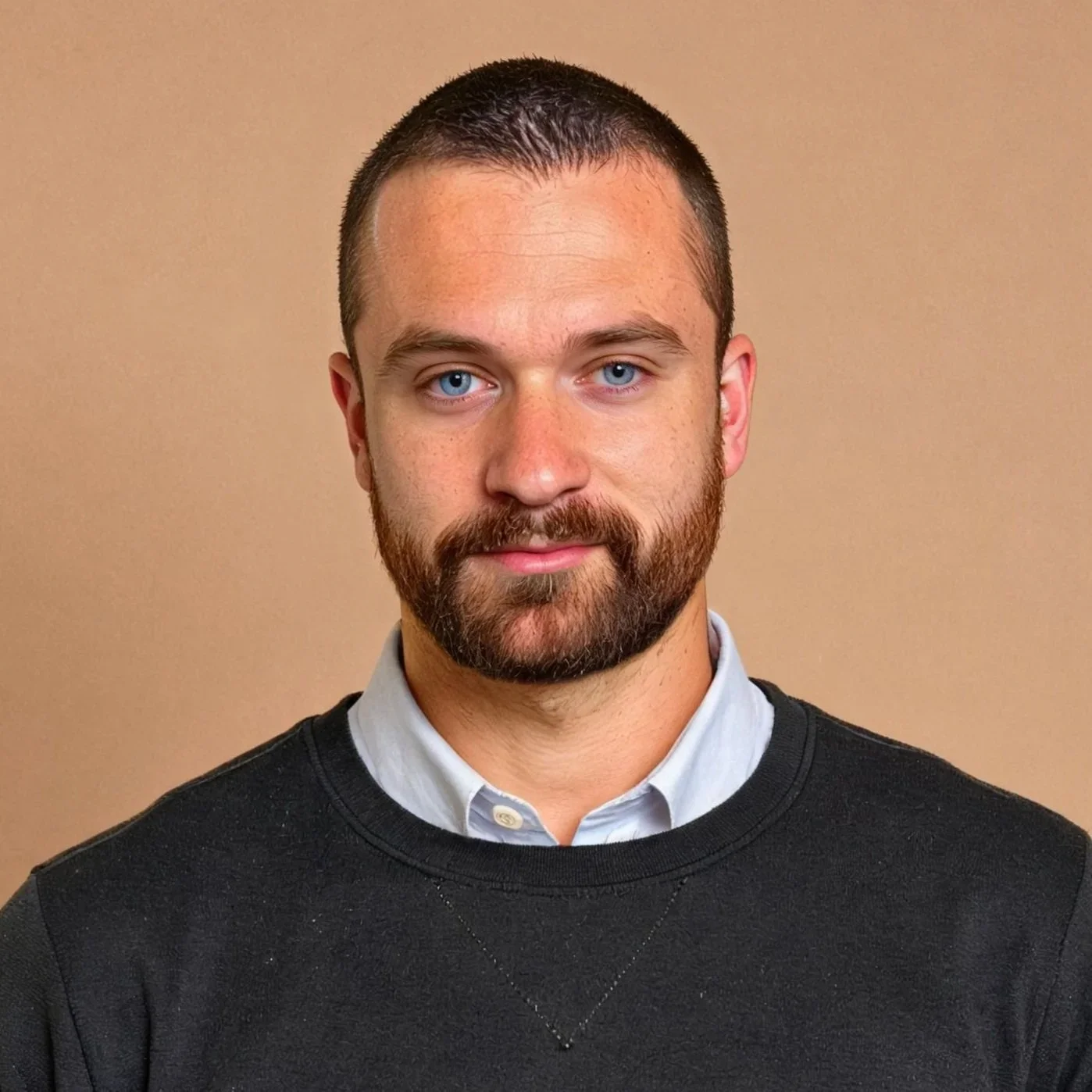
Dominik Bortas, COO (Croatia)
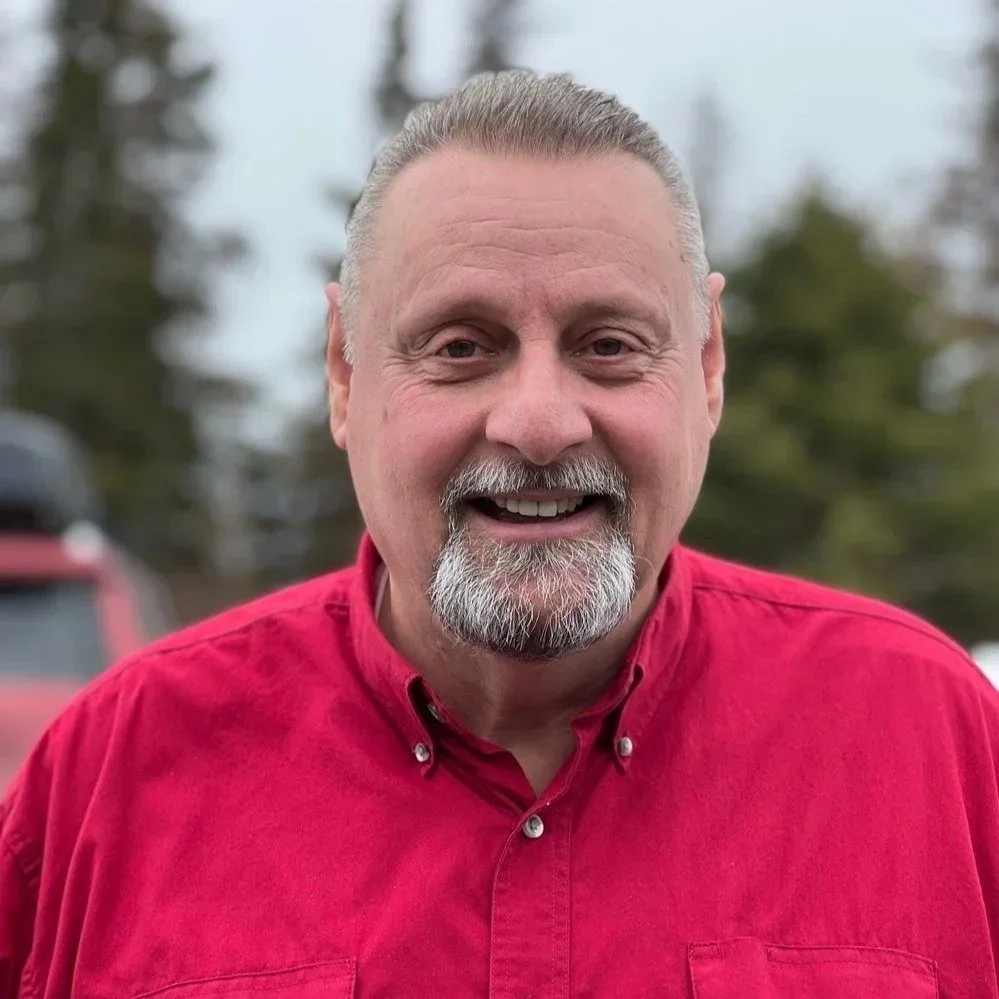
Dr. Jim Hamilton, Co-Founder (USA)
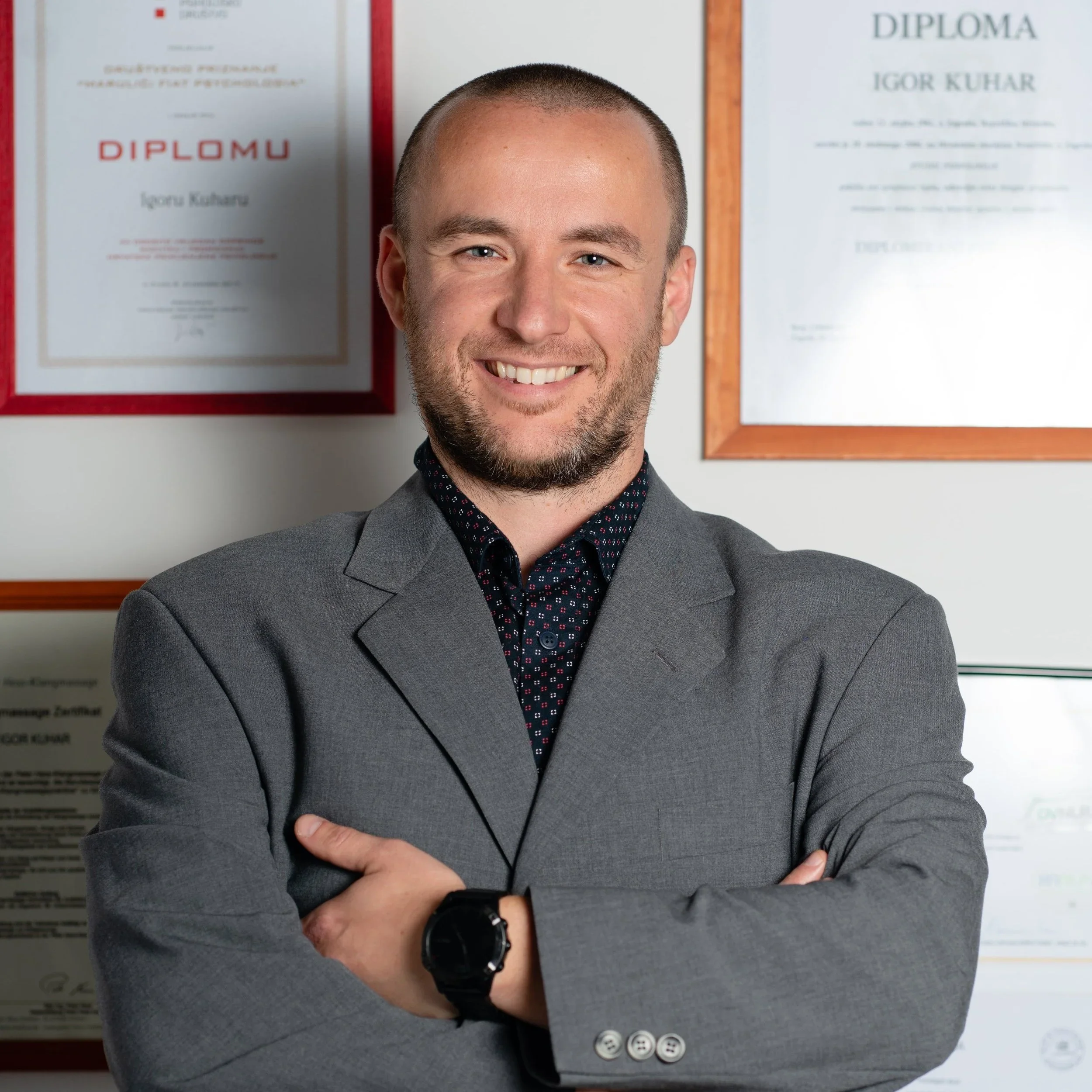
Igor Kuhar, Ambassador (Croatia)
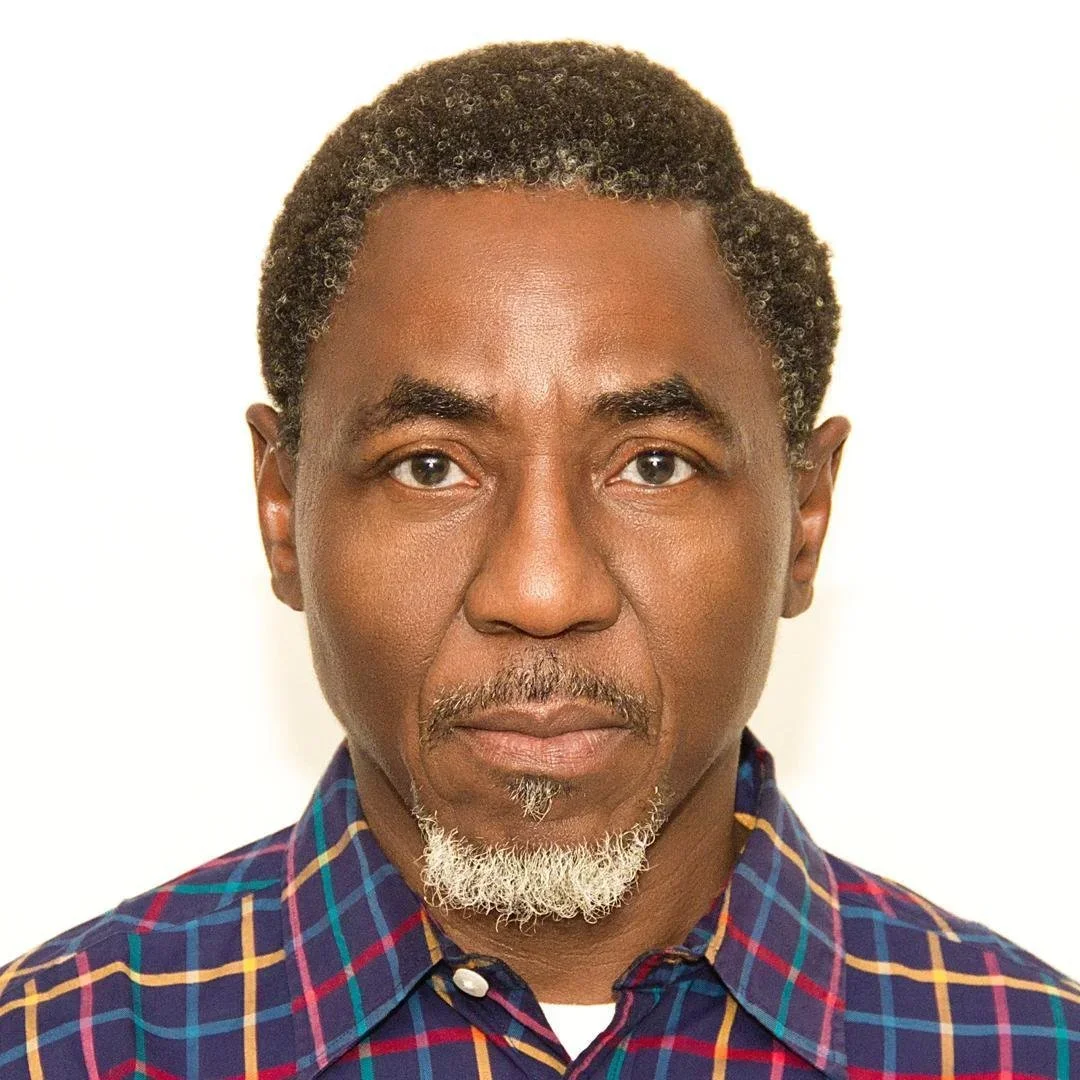
Dr. Dotun Reju, Ambassador (Nigeria)
Join Our Team
Intelligent Team Design.
-
Zachary Hamilton is a U.S. Air Force veteran, doctoral scholar, and practitioner who has spent his career working inside the institutions others consider too fragmented to fix. His military service includes recognition as Airman of the Year for the 43rd Fighter Squadron and selection for Senior Airman Below-the-Zone — early markers of a career built on operating above expectation inside high-accountability systems. That same discipline carried into some of the country's most complex correctional and human-services environments: Zachary introduced transformational recovery and reentry programming across a five-prison complex within the Texas Department of Corrections and at Muskegon Correctional Facility in Michigan, and catalyzed the formation of a sober living home for vulnerable women on Alaska's Kenai Peninsula. He has also led at the intersection of enterprise and community, serving as President of a regional business networking organization in Texas that generated more than $12 million in economic activity between 2016 and 2017. Zachary holds a Doctor of Transformational Leadership and a Master of Civic and Social Entrepreneurship from Bakke Graduate University, a Bachelor of Science in Biblical Studies from Baptist College of Florida, and an Associate of Applied Science in Avionics Systems Technology from the Community College of the Air Force. His practice areas — asset-based community development and capacity building, troubleshooting and change management, and design thinking — form the operational core of DODG's methodology: the conviction that institutions don't fail from lack of vision, but from loss of coherence, and that restoring it requires someone who has done the work from inside the system, not just studied it from outside.
-
Dominik Bortas brings a track record of operating at scale in the coaching and digital learning space, most notably leading the world's largest online coaching summit — an event that convened over 13,000 coaches from 127 countries. He pioneered large-scale coaching facilitation through a webinar-based session that coordinated more than 100 coaches serving 1,150 participants simultaneously, and managed an ongoing coaching membership community of over 1,400 professionals. That combination — orchestrating complexity at volume without losing individual signal — is the operational instinct he brings to DODG. Dominik's expertise spans strategic project management and execution, digital marketing and brand growth, and AI-powered digital product management, positioning him at the intersection of DODG's operational infrastructure and its emerging AI enablement services. He is a Certified ICI NLP Master Coach and a Certified HANLP/EANLP NLP Trainer, holds a Workplace Transformational Leader credential from Bakke Graduate University, and earned a Master of Primary Education specializing in Technology. Where Zachary architects institutional coherence and Jim develops the leaders who carry it, Dominik builds and scales the systems that let it operate — the execution layer that turns framework into function.
-
Jim Hamilton has spent the past fifteen years coaching executive leaders and consulting with organizations across the public, private, and social sectors, working at the level where individual leadership development and institutional performance meet. His engagements span some of the highest-stakes coordination problems in global development: Jim provided systemic team coaching for a global initiative within a leading health organization operating on a $35M budget and impacting more than four million people, focused on improving reproductive health mortality rates across nine majority world nations. He has also served as a long-term consulting partner to a social impact network across South Asia, supporting its launch, build, and expansion across several continents while coaching its CEO and leadership team directly. Jim's expertise centers on executive and systemic team coaching, nonprofit executive management and board development, and culture creation and organizational development — the disciplines that determine whether an institution's leadership can actually carry the coherence it claims to want. He is a Certified Executive Coach and Certified Career Coach through the Center for Executive Coaching and a member of the International Coaching Federation (ICF), and holds additional coaching certifications through PrinciplesYou, the Global Team Coaching Institute (GTCI), and SRS in Ministry Partner Development / Via. He has earned the European Mentoring and Coaching Council's Team Coaching Individual Accreditation (ITCA) at both the foundation and practitioner levels, and is a Birkman Certified Professional. Where Zachary's practice is oriented toward institutional architecture, Jim's is oriented toward the leaders who must hold that architecture together — a distinction that reflects how DODG approaches coherence: as both a systems problem and a human one.
-
Igor Kuhar serves as DODG's Ambassador in Croatia, bringing more than twenty years of experience in integrative well-being, life and social counseling, NLP coaching, and bodywork therapies to the firm's international reach. His contributions to applied psychology were formally recognized in 2017, when the Croatian Psychological Society awarded him the Marulić – Fiat Psychologia Award for outstanding innovation in the field. Igor has developed transformative coaching programs specializing in stress management, parental support, and sustainable conscious development, and holds licensure as a senior NLP and coaching trainer and business coach trainer, alongside standing as a business consultant, educator, mediator, and coach. His clinical range is unusually broad: certified training in psychotherapy and trauma healing (EMDR, NLPt, Integrative Psychotherapy), bodywork modalities including Shiatsu, Quantum Bodywork, Craniosacral Therapy, and Sound Therapy, work-life balance and self-regulation methods such as WingWave Coaching and Autogenic Training, and parental and child development support through Marte Meo, Sound Pedagogy, and structured parental skill training. Igor holds a Diploma in Life and Social Counseling accredited through the University of Vienna, Austria (2021), and a Diploma in Psychology from the University of Zagreb, Croatia (2006). Where DODG's leadership team addresses institutional coherence at the organizational level, Igor's practice addresses it at the level of the individual and family system — a reminder that institutions are ultimately made coherent or incoherent by the people inside them, and that DODG's reach into behavioral and community health depends on practitioners who work in that register.
-
Dotun Reju serves as DODG's Ambassador in Nigeria, bringing a career built on founding and governing institutions across civic, educational, and academic spheres. He is the Founder of Patris Empowerment Initiative, a civic leadership platform focused on responsible governance and economic empowerment, and Co-founder of Kingdom Citizens Pavilion Ministries and Schools, where he helped build values-based, holistic education models from the ground up. Dotun established the Center for Transformational Leadership, training leaders across sectors in sustainable impact and ethics, and serves as a Board of Regents member and Professor at Bakke Graduate University, mentoring leaders globally through both academic and applied training — a shared institutional home with Zachary Hamilton, whose doctoral work was completed at the same university. His public scholarship extends across multiple platforms, including The Dr. Reju Podcast, Dr. Reju Musings, and the Answers with Dr. Reju radio show, alongside authorship and contributions to international publications on transformational leadership, theology of work, and civic responsibility. Dotun holds a Doctor of Ministry in Transformational Leadership and Theology of Work from Bakke Graduate University, a Master of Arts in Christian Leadership from West African Theological Seminary, a Bachelor of Science in Sociology from the University of Lagos, and additional training in governance, leadership, and theology from international institutions. His practice areas — transformational and servant leadership, civic engagement and social innovation, governance and community development, faith-integrated education and curriculum design, public scholarship, coaching and capacity building, and cross-cultural systems thinking — reflect DODG's Faith-Based Community Development vertical at institutional scale: not a single organization made coherent, but an ecosystem of civic, educational, and ministry institutions built and governed with the same underlying discipline.
If This Resonates, That Is Probably a Signal.
Most leaders who find their way to Department of Doing Good arrive with a specific feeling — not quite crisis, not quite confusion, but a persistent sense that something in their institution is working against itself.
That feeling is a signal.
A Signal Scan is how we begin to read it together.
Want to understand the framework first? Explore Coherence OS →